There have been many challenges that face the local church today. With the decreased population active in congregational life as well as lows of approximately two-thirds of the Protestant congregations in North America having long-term attendance trends that are either flat or declining . Added to these diminishing numbers, there is clergy burnout, the loss of youth, biblical illiteracy, loss of genuine spirituality, stemmed from a widespread confusion about both the purpose and the message of the church of Jesus Christ . Local church’s are therefore in desperate need for renewal. This can only be done when a practical process for a local church to renew its theological vision, identity and missional strategies are adopted. A reflection will be taken outlining the process of renewing the local church starting with its theological vision.
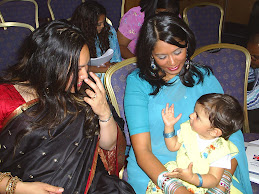
In order for a local church to experience renewal it must understand, develop and adopt true community in its theological vision . Although many churches get by for awhile on size, skilled communication, and programs to meet every need, it must build a sense that each member belongs to each other. Without a community where members know, explore, discover, and touch one another, isolation and despair will drive the community in wrong directions, the corrupt efforts to live meaningfully and to love well. The church is the one institution that has the function of community as part of its strategy to achieve its mission (Hebrews 10:25).
This community is understood to be when believers share daily life in pursuit of the kingdom of God . It is where all members experiences fellowship and acceptance because they belong to a web of loving, committed relationships. Christian community means living a life of interdependence, support, service, communion, sharing, and solidarity with brothers and sisters in Christ. It involves celebrating our joys and triumphs as well as struggling to move through problems and conflicts towards unity and reconciliation. Community means being part of a body of people committed to extraordinary relationships rooted in a common identity and purpose in Christ. It means jointly building a way of life, a group memory, and a common anticipated future. Christians can’t fully live out the Bible’s call without living in community. It is where church members become an extended family or household (Gal 6:10; Eph 2:19; Heb. 3:6; 1 Pet 4:17) whose ties are stronger than those of our natural families (Luke 8:20-21). All believers are called to an experience of deep fellowship, sharing and communion (Acts 2:42; 1 John 1:3,7; Philem 6). Believing in Christ makes Christians a new race, and a new nation. It turns Christians into the people of God, in to citizens of a new kind of city (Titus 2:14; 1 Peter 2:9-10; Phil 3:20; Heb 13:14).
To develop true community it must be decided that the central mission of the church is to cultivate disciples . In order to cultivate disciples it is vital to define the outcome of a disciple – to lay out the content that forms the common purpose of community. To help do this, a profile is established from the summary statement Jesus made in response to the question about how to inherit eternal life. He responded by saying that a disciple must love God and neighbor which are the most important commandments of all disciples. This can be done in following a profile of tens specific practical spiritual disciplines. The first one is that disciples must worship God for who he is and what he has done for us (Psalm 95:1-7). They are to pray to God to know him and lay requests before him to find direction for life (Psalm 66:16-20). They need to study the Bible to know God and to hold to truth and find direction for life from it (Hebrews 4:12). Disciples must have single minded focus on God and his priorities for life (Matthew 6:33). They must fellowship in a biblical community to fulfill God’s purpose in our life and in others’ lives in the world (Acts 2:42-47). They are to use the spiritual gifts God has given us for fulfill God’s purposes (1 Corinthians 12:1-31). Time must be given away to God’s purposes (Colossians 3:17). Also, money must be given away to fulfill God’s purposes (2 Corinthians 8:7). The ninth is to share personal faith to fulfill God’s purposes (Ephesians 6:19-20). And finally, life must be given away to fulfill God’s purposes (Romans 12:1-2). (PG 78-79)
The local church can adopt true community through three concrete processes. These processes must be adopted within the home groups of a local church. First, it will call for members of the community to annually assess personal development in Christ using the a fore mentioned profile. Areas of struggle will be confessed to one another and personal goals for growth in Christ will be set in the year to come. Progress will be shared throughout the year and encouragement for one another will be done monthly in pursuit of maturing as disciples to become Christ like. Second, members of the biblical community will support the local church through involvement in ministries and service opportunities such as youth, children, worship, ushers and greeters. A celebration of what God is doing will be done through a special quarterly gathering. Third, the biblical community will care for one another in practical help for those in difficult and crisis situations. Some examples of this can be done through hospital or home visits, meal preparation, prayer, referral to church and community resources, and the like. (PG 82-83) When the local church sets goals with vision, by faith, and with serious considerations for achieving those goals, they translate theological vision and identity of the Church towards becoming what it is meant to be. Goal setting places the local church between confession and action. But, church renewal doesn’t finish with theological vision.
Not only does church renewal occur within its theological vision, but it must also encompass the identity of a local church. This can be done by adopting the same feasible pattern of Peter . Peter kept reminding his readers that they were “a chosen people, a royal priesthood, a holy nation, people belonging to God, that… may declare the praises of him who called you out of darkness and into his wonderful light” (1 Peter 2:9). The result of the church’s choseness would impact missions in that, “…the ‘pagans’ would “see your good deeds and glorify God on the day he visits us (1 Peter 2:12). Missionary congregations find their special calling and identity as, “… a light for the Gentiles… priests for the nations. “ They are the missionary people of God whose uniqueness derives directly from God’s instrumental purposes for them. They are God’s special people who, because of God’s call, emerge in human history as the covenant community of the King, a branch chapter of the kingdom of God. The local church must preach and remind itself of this message just as Peter has.
In addition to the local church's responsibility to preach Peter’s message, it must also teach about its relationship with the whole world. It is rooted in God’s election of Israel as a special people with a unique heritage, mission and hope. Israel understood its reason for being from the framework of a covenant relationship with YHWH. The relationship involved both blessing and cursing, two dies of the same covenant which spelled out Israel’s nature as the special people of YHWH. The people accepted the negative with the positive, convinced by historical experiences that God held Israel in particular esteem as his special people. At the same time, Israel became increasingly conscious of the fact that God was not to be owned or controlled. He was Lord of all and within the covenant had given Israel a special purpose in relation to other nations. To be bound in covenant with YHWH meant to be participants in YHWH’s universal purpose for the whole world. Israel could not remain forever exclusive because YHWH’s desire was to bless all peoples. To be the people of YHWH meant a commitment to be an instrument on behalf of all the nations within the universal scope of YHWH’s lordship over all the world.
Such a notion of Israel’s life and mission insisted on the one hand that it protect its identity in the world, and on the other hand that it serves the world towards which its mission was set. Israel was a special people, yet its mission was to represent before God all the peoples of the earth. Its uniqueness did not stem from its ancestry, nor its history, race, culture or language. It stemmed from YHHW’s unique and gracious call. Because of YHWH’s unique purpose, Israel considered itself different, having a special destiny, a unique mission which set it apart from all other races, cultures, tribes, families and nations.
Jesus adapted this concept in his call to his disciples and church. He told them they were in the world but not of the world because their allegiances, values, goals, and hope were not of the world. They were sent to be a part of the world, but they were sent as sheep among wolves to be hated and persecuted just as he was (Matt. 10:16-25). They represented the world and were sent to the world, and yet they were uniquely separated from the world by God’s call to discipleship. Teaching about this unique identity and purpose will not only help renew the church’s identity but it will also touch the missional strategies of a local church which will be looked at next.
For renewal to occur it must also cover the missional strategies of a local church. This will happen as a church confesses its oneness. One of the most important sources for this is found in Paul’s letter to the Ephesians. Paul states, “There is one body and one Spirit, as there is one hope held out in God’s call to you; one Lord, one faith, one baptism; one God and Father of all, who is over all and through all and in all” (Eph 4:4-6). Christians receive by faith the oneness of the Church. It is God-given, bounded by the Spirit of God who gathers the Church. The oneness is a faith affirmation against the brokenness and dividedness of the Church.
This confession has practical significance. Because Christians receive by faith, the oneness of the Church, they therefore strive to achieve that oneness (Eph 4:1-3). Paul exhorts to, “spare no effort to make fast with the bonds of peace the unity which the Spirit gives” (Eph 4:3). This growth in oneness occurs through the incorporation of members into the body (numerical growth); growth through the spiritual development of the members of the body as they exercise their gifts for the sake of the world (spiritual growth); growth through the increased impact of the body of Christ, in the world to which it has been sent (diakoniai growth) and growth through an enhanced understanding of the lordship of Christ in the Church, preventing us from being “tossed by the waves and whirled about by every fresh gust of teaching. (theological growth, Eph 4:14). Mission and unity are therefore wedded together in Paul’s view of the church.
Not only is it practical to confess the unity of the church but it is also practical to confess the church’s universality. Because the church is universal in that it is for all people, it therefore never ceases to call, to invite, to draw everyone to him. The church is a completely open fellowship, with its doors always spread wide, open to all. It is by its very nature missionary, sent to all people precisely because the Head of the Church “fills all in all.” All Christians have been drawn into the church and than sent out to make disciples of others. This universality becomes something towards which the people strive.
The practical confession of the unity and universality of the church give a renewed theological vision of the local congregation in mission. This confession will intentionally and unavoidably commit Christians to participate in God’s mission in the world.
Van Engen, Charles. God's Missionary People: Returning the Purpose of the Local Church. Grand Rapids: Baker, 1991.
266 E54
The Local Congregation must constantly be reminded that because of their identity, they are called to be God’s instruments for blessing the nations. The local church can renew it’s missional strategies by measuring its own forms of sharing the gospel against Jesus’ . Jesus’ gospel is none other than the “good news of the kingdom of God” and had a holistic method. It meant physically (healing), intellectually (teaching) and spiritually (preaching). This holistic ministry of the good news was a sign of his divine mission. In response to John the Baptist’s question, “Are you the one who is to come, or are we to expect some other?”” (Luke 7:20 NEB), Jesus said to John’s disciples: “Go tell John what you have seen and heard: the blind receive their sight, the lame walk, the lepers are cleansed, and the deaf hear, the dead are raised up, the poor have the good news preached to them. And blessed is he who takes no offense at me” (Luke 7:18-23; Matt. 11:5-6). Jesus also sends the apostles out to, “…preach as you go, saying, ‘the Kingdom of heaven is at hand.’ Heal the sick, raise the dead, cleanse the lepers, cast out demon.” (Matt. 10:7-8). This holistic method was in word and deed and done by a small community. The local church must also take on a holistic approach in addressing physical, intellectual and spiritual needs.
The local church must understand its role as witness to, and embryonic demonstration of, the kingdom of God as the just reign of God to experience renewal . Christians will than need to see that all activity as having kingdom significance, so they strive to bring all things under the Lordship of Christ. They will know that a secular job may be kingdom ministry if it contributes toward kingdom realities. What this will look like practically is that Christians will be ready to shift job, career, or venue if kingdom priorities so dictate.
This perspective will bring concerns of justice and evangelistic witness together. The local church will become committed to peace, justice, righteousness at every level of society because the circumference of the kingdom includes, “all things in heaven and on earth” (Eph 1:10) and the welfare of every person and everything God has made. Christians concerned with issues of justice will want to see as many people as possible come to faith in Jesus Christ and fidelity in his kingdom, while Christians concerned with evangelism want to see justice want to see justice realized in all areas of society so the gospel will be made visibly credible. There would be no split or tension between these two vital concerns. As both are brought together, missions take on a renewed broader scope.
Not only is justice and evangelism brought together but the line between sacred and secular is erased. Rather than secularization of society of the sacralization of religious concerns, the local church will see all things are within the sovereignty of God and his concern. This removes any compartmentalized thinking. Economics, ecology, politics, the arts, social and family life become all topics of the kingdom and church. This will expand missions to bring Jesus into every aspect of life.
A local church must also adopt missional evangelism to experience renewal . It is indirect, authentic, and real. It arises out of relationship in the family, neighborhood, workplace and social situations. It connects with the supports system provided by the community that lives user the reign of God. The Christian brings the unchurched to a healthy vibrant community of faith and through association with the community; faith is discussed and caught as the gospel is overheard. This form of personal contact is the primary means of bringing people to Christ and the church. According to research of the American Growth Institute, seventy-nine percent of people who come to church come because they have been influenced to do so by a friend or relative. This personal contact is the most fruitful point of contact. Coming to church may start with a men’s breakfast, a women’s tea, a home group Bible study fellowship, or some other group designed to touch people where they hurt or struggle. As the interest of the unchurched seeker grows, he or she is invited to Sunday worship and follow up discussions with in a small group, one on one or in a home, restaurant or other comfortable meeting place. This time needs to be informal, open-ended, and without pressure. The goal is to discuss the Christian faith and all the Holy Spirit to work in the heart and mind of the seeker. This is all done in a loving, caring, energetic community of people who live out the faith. People get converted through the experience of the embracing love of a community.
Although there are many challenges to the local church today, renewal can still be experienced. It starts as its vision demonstrates true community in which each member is in pursuit of the kingdom of God in loving, committed relationships. This occurs as disciples adopt viable spiritual disciplines and keep each other accountable in confessing areas of struggle and setting goals for maturity. Renewal will reach the identity of the church as the church reminds itself of its special chooseness as God’s people to be missionaries into the world. This requires the church to confess its oneness and universality which will commit Christians’ to participate in God’s mission to reach the world. Missional strategies of the church will be further renewed as holistic approaches are adopted and an understanding of the local church as a spectator and developing manifestation of the Kingdom happens. It is through this understanding that will unite concerns of justice with evangelism broadening and renewing the scope of how missions is done. It will also remove seeing secular and sacred as mutually exclusive bringing and the mission field to every area of life. Missional Evangelism in the form of personal contact has been the most fruitful form of bringing people to Church. This involves building a relationship with an unchurched seeker and inviting them to a church group with the final goal of discussing and sharing the gospel in the loving, caring embracing community.